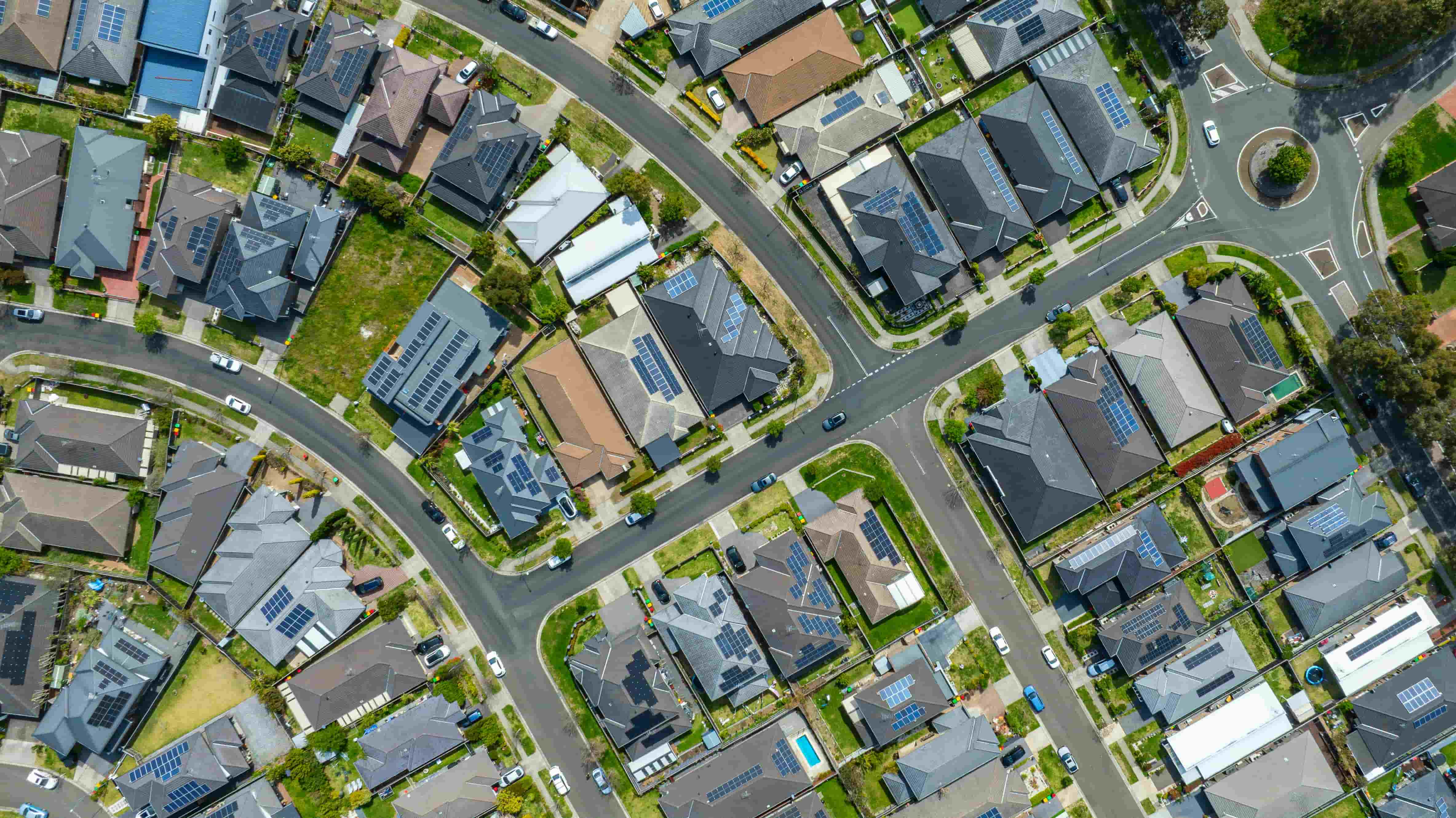
What is a walkability score?
A walkability score is a single number — usually on a 0-to-100 scale — that estimates how easy it is to live your daily life on foot from a particular address. The higher the score, the more of the things you need every week (shops, transport, schools, parks, cafes, healthcare) sit within a comfortable walking distance, along a route that is actually safe and pleasant to walk.
Think of it as a translation. A property listing tells you about the building. A walkability score tells you about the neighbourhood around it — specifically, the part of the neighbourhood you can reach without getting in a car.
The concept was popularised by the Seattle-based service Walk Score, which launched in 2007 and was later acquired by the U.S. property portal Redfin. Since then, walkability scoring has become a standard layer of property intelligence in most developed-economy real estate markets, including Australia.
This guide explains what goes into a walkability score, why walkability matters for everything from your weekly budget to your long-term health, and how to use walkability data to find a home that genuinely suits the way you want to live.
What goes into a walkability score?
There is no single industry-standard formula for walkability — different providers weight inputs differently and use different datasets. But across every credible methodology, the same handful of ingredients turn up.
1. Proximity to everyday amenities
The single biggest input to any walkability score is how close you are to the places people actually walk to. Most methodologies group these into broad categories such as:
- Transport — train stations, tram stops, bus stops, ferry terminals.
- Shopping — supermarkets, grocers, pharmacies, hardware, general retail.
- Education — primary schools, secondary schools, childcare centres, universities.
- Health — GPs, dentists, hospitals, allied health clinics.
- Gastronomy — cafes, restaurants, bars, takeaway.
- Nature — parks, reserves, playgrounds, sports fields, waterways.
- Entertainment — cinemas, theatres, galleries, community venues.
A property doesn't need to be close to every category to score well, but a home with strong access across most of them is what people usually mean when they say a neighbourhood is "walkable".
2. Walking distance, not straight-line distance
This is where walkability scores start to separate themselves from a casual look at a map. The naive way to measure distance is "as the crow flies" — a straight line from your front door to the supermarket. The problem is that nobody walks in a straight line.
A serious walkability score uses network distance: the actual footpaths, crossings, laneways, and pedestrian routes that connect your address to nearby amenities. If a river, freeway, or rail corridor sits between you and the shops, network distance reflects the detour. Crow-flies distance does not.
That difference matters. Two homes that look "500 metres from a train station" on a listing can be a five-minute stroll and a fifteen-minute hike, depending on whether there's a footbridge in the right place.
3. Diversity of destinations
A walkability score rewards variety, not just volume. Ten cafes within 400 metres of your front door is lovely, but it doesn't help you buy milk, see a doctor, or get to work. The strongest walkable neighbourhoods are the ones where you can satisfy a wide range of needs on foot — what urban planners call mixed land use.
This is why thoughtfully composed walkability scores look across multiple categories rather than just counting "points of interest". A neighbourhood with one supermarket, one school, one train station, and one park within walking distance often scores better than a hospitality strip with thirty restaurants and nothing else.
4. Pedestrian infrastructure and street design
Distance is only part of the story. Walking 800 metres along a quiet, tree-lined street with continuous footpaths and signalised crossings is a fundamentally different experience to walking 800 metres along a four-lane arterial with no shade and no kerb ramps.
The best walkability methodologies factor in (where data is available):
- Footpath presence and quality
- Intersection density — more intersections per square kilometre generally means a finer-grained street grid and more direct walking routes.
- Crossings — signalised crossings, pedestrian islands, and traffic-calmed intersections.
- Block size — smaller blocks tend to support more walkable networks than large superblocks.
5. The "15-minute neighbourhood" framing
Walkability scoring sits inside a broader urban-planning idea known as the 15-minute city (sometimes the 20-minute neighbourhood), developed by Sorbonne professor Carlos Moreno around 2016 and adopted by cities including Paris and Melbourne as a planning principle. The premise is simple: residents should be able to meet most of their daily needs within a 15-minute walk or cycle from home.
A high walkability score, in practical terms, is what a 15-minute neighbourhood looks like on the map.
Why walkability matters
Walkable homes used to be framed as a lifestyle preference — nice for weekend brunch, good for the dog. The case for walkability has hardened well beyond that.
Health
The World Health Organization recommends adults get at least 150 to 300 minutes of moderate-intensity physical activity per week. Living somewhere where walking is the default way to get around builds that activity into ordinary life — the school run, the supermarket trip, the morning commute — without any deliberate "exercise time". A large body of public health research links residence in walkable neighbourhoods with lower rates of cardiovascular disease and obesity.
Money
Cars are expensive. According to the Australian Automobile Association's Transport Affordability Index, transport — most of it driving costs — is one of the largest weekly expenses for typical Australian households, often comparable to mortgage or rent costs in outer suburbs where car dependence is highest. A walkable home isn't just a lifestyle upgrade; for many households it's the difference between needing two cars and needing one, which feeds straight back into household budgets.
Property value
There is a well-documented "walkability premium" in property markets. Studies in the United States, Canada, the UK, and Australia have repeatedly shown that homes in highly walkable neighbourhoods command higher prices per square metre than otherwise comparable homes in car-dependent suburbs — and tend to be more resilient in downturns. Walkability is, increasingly, a property fundamental.
Environment
Transport is one of Australia's largest sources of household emissions. A home that doesn't require driving for every trip is a structurally lower-emissions home, even before anyone installs a single solar panel.
Community and wellbeing
People who walk through their neighbourhoods bump into other people. They use parks and high streets. They notice when something changes. Walkable neighbourhoods consistently score higher on measures of social cohesion and reported wellbeing than car-dependent ones.
Walkability scores are general — your lifestyle isn't
A single walkability number is a useful starting point, but no two households need exactly the same things from a neighbourhood.
A young professional working in the CBD lives or dies by the train station and the cafes.
A family with two primary-aged kids cares about catchment schools, parks, and a supermarket within pram distance.
A retiree wants a GP, a chemist, a quiet park, and a tram into town for the weekly outing.
An investor wants to know what the next ten years of demand profile looks like — which means understanding what each of those households would think of the location.
This is why the most useful walkability tools go beyond a single overall score and let you weight what matters to you. A neighbourhood that scores 70 overall might be a 95 for a transit-dependent professional and a 50 for a family that needs a public primary school. Both are true. Both are useful.
The right way to read a walkability score, in other words, is as a conversation starter, not a verdict. The real question is: how walkable is this address for my life?
How to find walkable homes in Australia
This is the problem geoscore.com.au is built to solve. Every Australian address on the platform gets a detailed Property Profile that breaks walkability down into the things you can actually act on:
- Category scores for Transport, Education, Shopping, Health, Gastronomy, Nature, Entertainment, and Amenities — each ranked against the suburb, local government area, and city.
- Real walking times to every nearby amenity, calculated along the actual pedestrian network rather than as crow-flies estimates.
- An interactive map with every scored amenity plotted around the property and colour-coded by category.
- Feature cards for individual points of interest, so you can see exactly what counts toward each score and why.
The result is the opposite of a black-box number. You see the walk to the train station. You see the walk to the school. You see the cafes and the parks and the supermarket, with times you can trust.
If you're choosing between two apartments, weighing up a suburb move, or simply curious how the address you already live at scores against the city around it, you can find out in a few seconds.
Search any Australian address and pull up its full property profile — walkability scores, walking times, and every nearby amenity, on one page, for free.